Marine hatch covers and manhole covers are essential access components on ships, offshore platforms, and other marine structures. They provide access to ballast tanks, fuel tanks, machinery spaces, and inspection compartments while helping prevent unwanted water or liquid ingress.
However, poor sealing, damaged gaskets, loose fasteners, and distorted cover plates can compromise watertight performance. For shipowners, shipyards, and maintenance teams, understanding these problems is important for preventing leakage and ensuring reliable vessel operations.
This guide explains how marine access covers maintain watertight integrity, common causes of seal failure, and what buyers should inspect before selecting replacement covers.
Marine hatch covers protect access openings that may be exposed to seawater, rain, moisture, or other operating conditions. Their sealing requirements depend on the installation location and the compartment being protected.
A properly designed marine cover helps perform several important functions:
Water protection: Prevents unwanted water ingress into designated compartments.
Equipment protection: Helps protect machinery and other equipment from moisture exposure.
Compartment integrity: Supports the required watertight, oil-tight, or gas-tight characteristics of the installation.
Maintenance access: Allows personnel to inspect or service enclosed spaces when authorized and safe to do so.
Different cover designs serve different purposes. For example, a deck inspection hatch may require protection against weather and seawater exposure, while a fuel tank access cover may need oil-resistant sealing materials.
Therefore, buyers should specify the intended installation environment rather than assuming that every marine access cover provides the same sealing performance.
Water leakage may result from several mechanical or installation-related problems.
Gaskets create a sealing interface between the cover and its frame. Over time, compression, wear, chemical exposure, and environmental conditions may affect their performance.
A cracked, hardened, or permanently compressed gasket may no longer provide the required contact pressure.
Bolted covers depend on an appropriate fastening arrangement to distribute compression across the gasket.
Uneven tightening, damaged bolts, or incorrect fastener installation can create gaps that allow water to enter.
Corrosion, scratches, deformation, or contamination around the sealing surface can prevent proper contact between the gasket and its mating surface.
Marine environments are particularly demanding because saltwater exposure and repeated opening can accelerate deterioration.
An incorrectly positioned cover or unsuitable replacement gasket can compromise sealing even when the individual components appear undamaged.
Installation should follow the manufacturer's instructions and approved vessel drawings.
A watertight access cover depends on the interaction between its structure, gasket, and fastening system.
Gasket material: The material must be compatible with the operating environment, temperature, and any liquids it may encounter.
Gasket compression: Sufficient compression is needed to create the intended seal, but excessive compression may damage certain gasket materials.
Fastener arrangement: Bolt spacing and fastening mechanisms influence how sealing pressure is distributed.
Sealing surface condition: The contact surfaces should meet the specified flatness, cleanliness, and dimensional requirements.
For a ship manhole cover, these factors are particularly important because the cover may be repeatedly opened during tank inspections and maintenance activities.
A replacement gasket should match the approved design rather than being selected solely by its approximate dimensions.
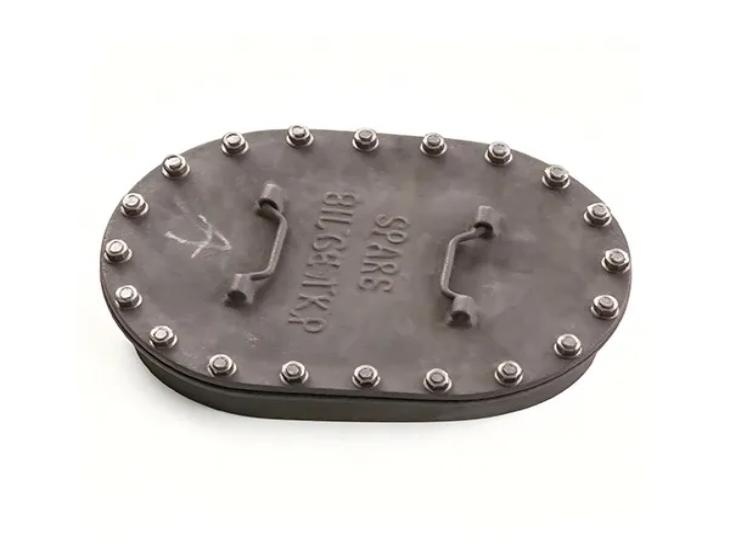
A structured inspection can help identify potential sealing problems before the cover is returned to service.
| Inspection item | What to check | Possible issue |
|---|---|---|
| Gasket | Cracks, deformation, compression damage | Loss of sealing contact |
| Cover plate | Corrosion, distortion, mechanical damage | Uneven gasket compression |
| Bolts and fasteners | Wear, corrosion, missing components | Insufficient clamping |
| Sealing surface | Dirt, scratches, corrosion | Leakage paths |
| Hinges and locking parts | Wear and alignment | Improper closure |
Before reinstallation, maintenance personnel should confirm that the correct gasket and fastening components are available.
Inspection and maintenance must follow approved vessel procedures. Tank entry or work involving enclosed spaces requires appropriate authorization and safety precautions.
Where required, the completed installation should undergo the specified tightness inspection or test before being returned to service.
Marine access covers may be designed for different sealing requirements.
Watertight covers are intended to prevent water passage under specified design and testing conditions. Requirements depend on installation location, pressure exposure, and applicable marine standards.
Oil-tight covers are used in applications where the sealing arrangement must prevent oil leakage. Gasket compatibility with the intended oil or fluid is an important consideration.
Gas-tight covers are designed for applications requiring resistance to gas passage under specified conditions. Their sealing arrangements and verification requirements may differ from those of ordinary watertight covers.
These classifications should not be treated as interchangeable.
Before requesting a quotation, buyers should prepare the technical requirements of the existing installation.
Important information includes:
Cover type and intended installation location.
Opening dimensions and cover geometry.
Required watertight, oil-tight, or gas-tight performance.
Material, gasket, and surface treatment requirements.
Fastening arrangement and opening mechanism.
Applicable marine standards and classification requirements.
Product drawings, quantities, and delivery schedule.
Normanship's marine cover range includes bolted manhole covers, hinged access covers, and steel small hatch covers. Some models are available in standard dimensions, while project-specific manufacturing options can be discussed according to customer drawings.
Maintaining watertight integrity in marine hatch covers requires attention to gasket condition, fastening arrangements, sealing surfaces, and correct installation.
Damaged seals, corrosion, loose bolts, or distorted cover plates can all contribute to leakage. Regular inspection and appropriate maintenance help identify these issues before they affect the intended compartment protection.
For shipyards and marine equipment buyers, selecting a suitable replacement cover begins with confirming the opening dimensions, sealing requirements, material specifications, and applicable standards.
A properly specified and maintained marine access cover supports dependable compartment protection and long-term vessel operation.
A ship manhole cover provides access to enclosed compartments such as ballast tanks, fuel tanks, and inspection spaces while maintaining the required sealing characteristics when properly installed.
Common causes include damaged gaskets, corrosion, uneven fastener compression, distorted cover plates, and incorrect installation.
Confirm the installation location, opening dimensions, required sealing performance, material specifications, fastening arrangement, and applicable marine standards.
A damaged gasket should be evaluated against the manufacturer's acceptance criteria. Replacement is generally appropriate when damage prevents the gasket from meeting its sealing requirements.
No. Watertight and oil-tight covers are designed for different sealing conditions. Their materials and testing requirements may differ according to the intended application.
Yes. Normanship offers standard and project-specific marine manhole cover configurations. Buyers should provide approved drawings, opening dimensions, and sealing requirements for technical evaluation.


 English
 Español
 italiano
 português
 Nederland
 norsk