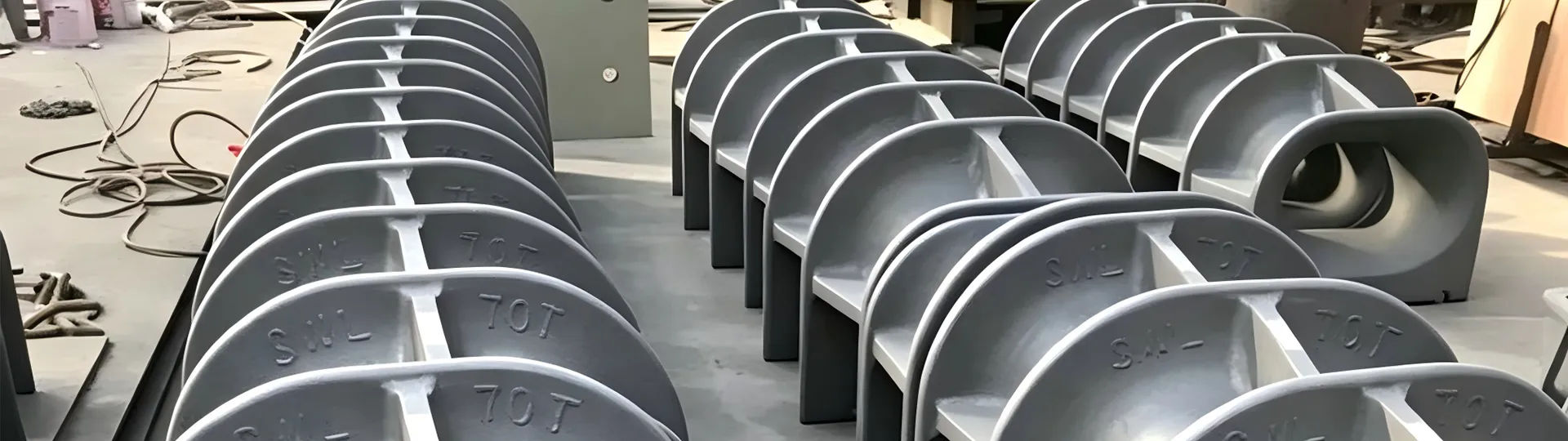
Marine mooring chock is critical ship mooring hardware for guiding mooring ropes and steel wires. We supply Panama chock, closed & open chock, bulwark-mounted chock in cast steel / STS316 stainless steel, deck-mount or bolting type. Compliant with ISO & JIS marine standards, class certification available for various commercial vessels and offshore projects. Custom sizes are acceptable.
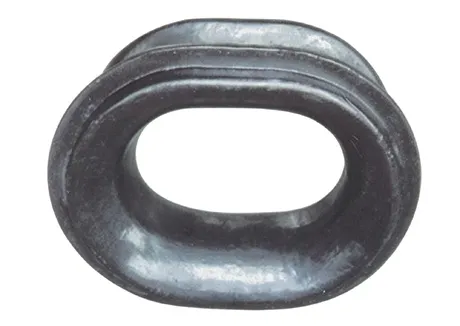
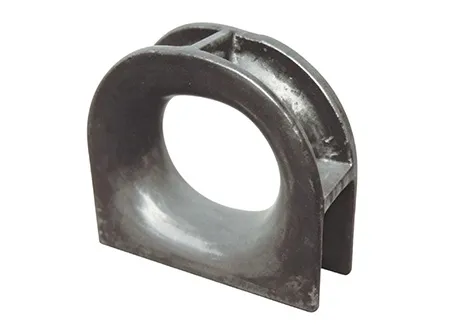
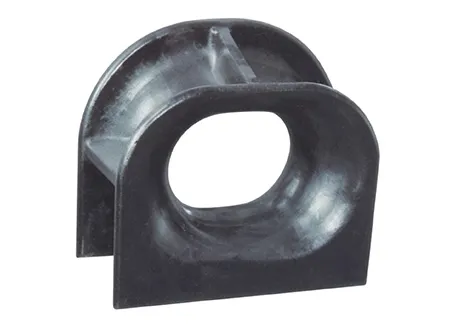
When a vessel docks alongside berths, piers or other ships, mooring chocks serve as the key guiding points for mooring ropes, hawsers and steel wires. Crew route mooring lines through marine mooring chocks to change rope direction smoothly, transfer mooring tension onto hull structures, and establish stable connection between vessel and berth.
For instance, on bulk carriers, container vessels and offshore working ships, multiple mooring lines are routed through open chock, closed / Panama chock or bulwark-mounted chock. Chocks absorb directional friction force, prevent mooring-line abrasion, and act as vital “line turning points” to keep the vessel securely fastened alongside the jetty.
Maximum safe working load (SWL) of the vessel mooring system
Vessel type and hull structure: deck-mount or bulwark-mount installation
Mooring line specification: rope diameter, wire-rope or synthetic hawser
Local marine environment: seawater corrosion, wind-wave loading conditions
Classification society requirements
Commercial merchant vessels: Container ship, bulk carrier, oil & chemical tanker
Offshore assets: Off-shore support vessels, working barges, offshore platforms
Government & patrol crafts, fishing vessels, work boats
Luxury yachts & passenger vessels
Shipyard new-building project


 English
 Español
 italiano
 português
 Nederland
 norsk
norsk